

- November 12, 2021
- Posted by: medium
- Category: International
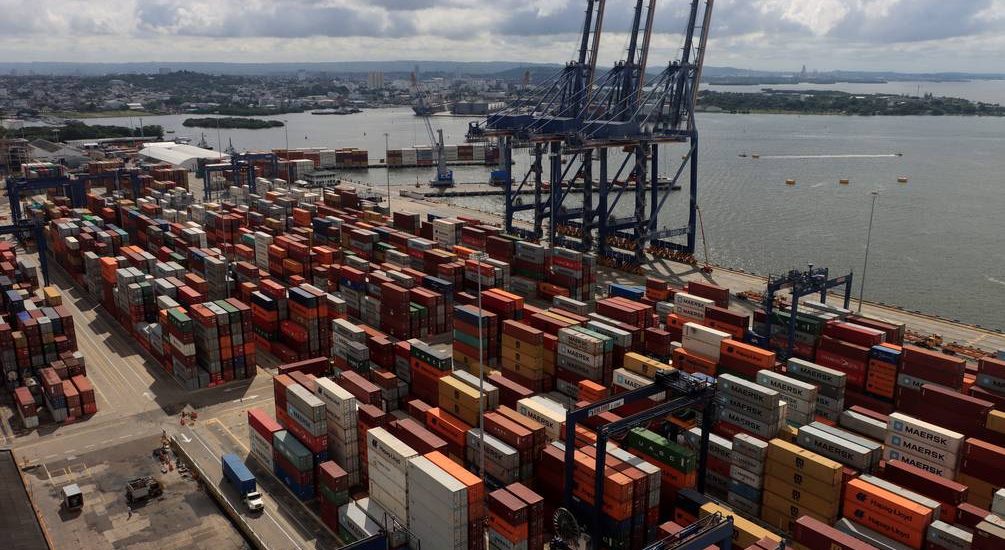
While the situation is not critical, the supply chain in some Latin American countries begins to stress.
Fertilizers for the powerful agricultural industry of Brazil, semiconductor chips for Mexican automakers or lack of ships to export Colombian coffee: Latin America also begins to feel the effects of the global supply crisis.
Although the situation is not critical, as in the United States, where the Christmas campaign is threatened, the supply chain in some Latin American countries begins to stress, since the region is purely importer and depends on world trade.
Since restrictions on mobility and economic activity began to be relaxed due to the Covid-19 pandemic, the demand for goods and services has experienced a sudden growth to which manufacturers and transporters have not been able to respond, which has generated bottlenecks in different parts of the world, especially in Asia and the United States.
Below is a summary of the current situation in the large Latin American economies.
Brazil
The collapse of Asian ports is impacting Brazil, the large Latin American economy and one of the world's largest food exporters, since fertilizers for agribusiness come mostly from China, its main trading partner.
It is also being affected by the embargoes imposed by several countries on Belarus, one of the largest exporters of potassium, the raw material for manufacturing fertilizers, Luis Eduardo Rangel, special advisor to the Ministry of Agriculture and Livestock, told Efe.
Although the analyzes “do not indicate an immediate crisis,” the effect could be felt in the 2021-2022 harvest, which is why Brazil is closing contracts with other suppliers to reduce a possible shortage, Rangel stressed.
According to the Parliamentary Agricultural Front, the container crisis already had a negative impact of 1 billion dollars on agricultural exports between last May and August.
"The crisis will be normalized in a maximum year and then and then containers are going to be left over," said Efe Roberto Gusmao, president of the port of Suape (Northeast), one of the main ones in the country.
In some cities some products begin to be scarce, such as Chinese toys, and several car factories have had to slow down their operations due to lack of pieces, such as semiconductors.
Mexico
The scarcity of semiconductor chips is more acute in the powerful Mexican automotive industry, the main component of industrial GDP, and specialists indicate that it could largely explain the quarterly fall of 0.2 % of GDP between July and September.
“We are very vulnerable, since we import many products, not only from China, but also from the United States,” Pablo López Sarabia, a professor at the Tecnológico de Monterrey, told Efe.
Mexico, he added, is also suffering a “double impact”: in recent times it has faced teacher blockades due to salary demands on the railways in the western state of Michoacán, affecting access to the Lázaro Cárdenas port, key to the Pacific.
Apart from the automotive sector, retail is also being hit and there is a certain lack of products that were in high demand during the pandemic, such as bicycles.
Mexico's central bank attributes part of the rise in inflation to these factors, which is close to 6% so far this year, double the official goal.
“Studies indicate that supply chains will not surely recover until almost the end of 2022, when they begin to normalize,” warned Professor López Sarabia.
Colombia
Colombians could have problems finding some Christmas gifts such as toys, liquor, electronic products and appliances, but what they will feel above all is an increase in prices, according to specialists.
“The shortage helps increase prices, but the greatest impact is in logistics costs, which have risen extraordinarily,” the president of the National Association of Exporters of Colombia (Analdex), Javier Díaz, told Efe.
A container that was usually brought from China at a cost of 2,200 dollars, today costs between 20,000 and 22,000: “The costs have multiplied by 10 and the seller is not going to assume that,” he stated.
For the expert, the solution in Latin America may take even longer than the rest of the world: "We are barely 4% of the shipping companies' business, we are not a priority. At least throughout 2022 we are going to have this complicated logistics and high costs."
Congestion in ports such as Los Angeles, in the United States, has also harmed exports and an operation that took 40 days is now taking 75.
For that reason, Díaz said, many operations, mainly coffee and sugar, were transferred to Cartagena, in the Caribbean, “to try to fulfill the commitments,” he said.
Argentina
In Argentina, the companies that are suffering from a lack of inputs are wineries, automotive companies, electronics, footwear and agricultural machinery manufacturers.
Marcelo Elizondo, international economic analyst and president of the Argentine chapter of the International Chamber of Commerce, told Efe that the most affected are SMEs.
The lower supply of freight and higher transportation prices imply a “worsening” of import problems in Argentina, where licenses and foreign exchange are already restricted, Elizondo said.
If Argentina has "dollar exit increases" because you have to pay the increase in logistics services, "there will be a exchange impact," he explained.
This, he added, could force the government to "tighten imports even stronger" and that the economy, which in 2020 turned three years in recession, "cannot be recovered."
The increase in maritime freight is also affecting the exports that go to Asia - the most important continental market for Argentina -, which for Elizondo can cause the South American country to "lose profitability."
Chile
In Chile, the pressure is not so much in the availability of the products, but in inventories and in waiting times, especially in durable goods, manager of Studies of the Chamber of Commerce of Santiago (CCS), George Lever told Efe.
"There is a very strong increase throughout the supply chain, from productive inputs to the historical increase in the cost of maritime freight," he warned.
This has caused a strong price increase, especially in segments that operate with smaller margins such as high technology, furniture, cars, electric tools, sound equipment and microwave.
“In the case of Chile, in addition to the reactivation of demand and supply problems due to congestion in production chains, we have the effect of abundant liquidity in households due to early withdrawals of pension funds and the recent reinforcement of fiscal transfers,” he concluded.